Is Boutique Fitness Right for Me?

321go • December 3, 2018

If you’re ready for results it’s time to ditch the health club…

There was a time when we got all the exercise we require from our daily activities. But as hunting and gathering lead to farming and eventually the industrialized world we live in today the need for human “labor” has been nearly eradicated. Now that we work desk jobs, eat our meals from the hot bar at Whole Foods, and enjoy a generally sedentary lifestyle we are required to reintroduce this missing physical activity. For some reason, the question of how to add physical activity, or work, back into our lives is one that has proven to be puzzling, controversial, and difficult terrain to navigate.


In response to the demands of the market the fitness industry has grown tremendously, particularly in North America where an estimated $28 billion was spent in 2015. Much of this industry is dominated by health clubs and large gym franchises that offer a sampling of strength equipment, cardio machines, TV’s, massage chairs and minimal staffing. Granted  how many staff members do you need when your members don’t actually attend the club? In a study done by students at UC Berkeley found 67% of gym memberships are never used in the population they surveyed.


“If you are not going to the gym, you are actually the gym’s best customer.” -Stacey Vanek Smith, NPR


The savvy marketers at big box gyms know how to target their marketing towards individuals who won’t actually come to the facility. As humans we often get a rush of excitement by a new fitness undertaking. “This is it, the time I actually change, no looking back,” you say. The challenge is that the health club has made zero commitment to you. They don’t care if you show up or not. Luckily there is someone out there who does.


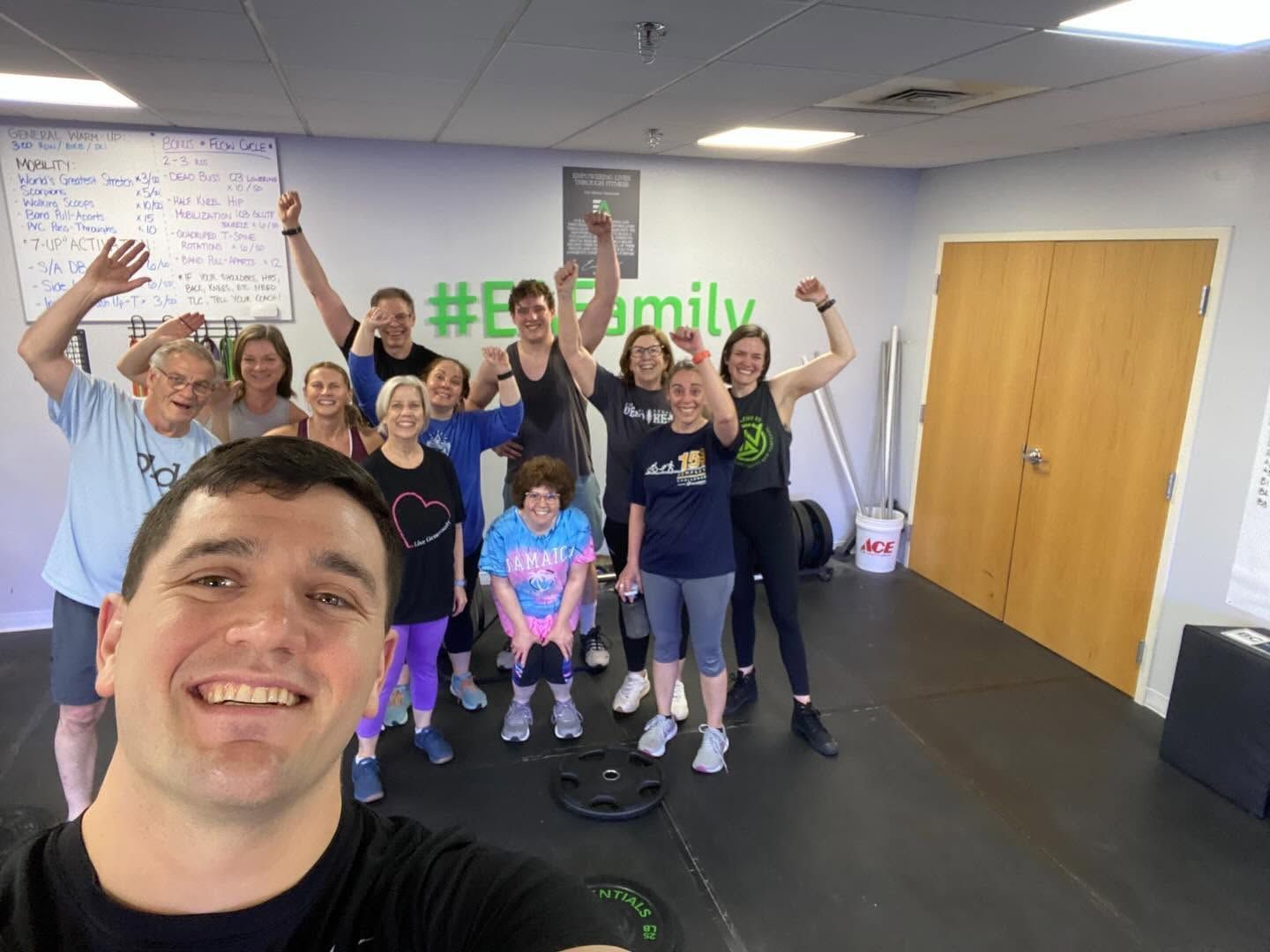
Boutique fitness is the alternative to the traditional health club model. Boutique gyms offer specialized classes based on the expertise of the owners, teachers, or coaches. CrossFit boxes, Barre studios, Bikram yoga, parkour facilities, spin classes  are all great examples of the boutique fitness model.


These communities succeed when the all parts are working together; the owner, staff, and clientele all succeed when they each meet their goals. This synergistic effect leads to faster results and more satisfaction from all parties. As a client you have a team of coaches and fellow members who are all rooting for you, teaching you, and most importantly holding you accountable. Becoming fit doesn’t have to be a chore, a challenge, or a pain point. In fact, it can even be funA yellow smiley face with one eye closed and a smile on it.


Boutique gyms have been seen rapid growth in the past decade as clients recognize that when it comes to fitness, not all gyms are created equal. Some of the most common excuses sound like:

  • “I have a hard time sticking to a routine”
  • “I’m just too busy to exercise”
  • “I get bored with going to the gym, it always feels like work”
  • “I don’t know how to lift weights/choose a routine/eat the right food”


These are great excuses, but since you’re ready to make a change it’s time to ditch the excuses and focus on RESULTS. By implementing a system that counters your excuses you’ll be left with the only option, the results that you want to achieve.


If you struggle with sticking to a routine you will benefit from the coaches, friends, and community members that you’ll meet at each class. A group of people that will ask you about your day, learn about your goals and life, and most importantly encourage you to show up consistently to your workouts.


If you claim to be too busy then you should sign up for classes ahead of time. The wide variety of classes that are available each day at time frames that are consistent with your schedule make it easy to squeeze in an hour long workout.


If boredom is your challenge then a workout that changes every day is exactly what you need. Not only that but the different coaching styles and friends you’ll make at different times of the day make each class a totally unique experience.


If information is the enemy then relax, because that’s already been taken care of for you. Your coach has put a lot of thought into a training program that will improve your fitness and will be by your side to instruct you on form, breathing, and what weights to use. Keep an eye out for group nutrition challenges to boot!


To get the results you want sometimes you need to try a new approach. If that trip to the gym feels more daunting than Frodo walking the ring to Mordor then it’s time to see what a boutique gym has in store for you!

recent posts

By Evan Amell • October 29, 2026
If you’ve ever told yourself, “I’ll work out when I have more time,” you’re not alone. Work deadlines move. Kids need a ride. The weather turns. And after 40, your energy and schedule may not look the same from one day to the next. That’s why waiting to feel motivated, or deciding each day whether you’ll exercise, can make consistency harder than it needs to be. Try this instead: schedule your workouts in advance as real calendar appointments. Choose days and times you can repeat, and decide ahead of time what you’ll do if life gets in the way. It’s a simple way to make fitness part of your week, not one more decision you have to wrestle with. Why motivation isn’t a reliable schedule Motivation is useful when it shows up. But it doesn’t always arrive at a convenient time. If you decide every day whether to work out, you’re asking yourself to negotiate with a busy calendar over and over. “Should I go before work? Maybe after dinner? I’m tired today… I’ll try tomorrow.” Before long, tomorrow keeps moving. A calendar appointment gives your workout a place in the week before other tasks fill every open space. You’re not promising to feel excited. You’re making a practical plan for when and where you’ll move. Research on physical activity planning supports this approach. Studies have found that specifying when and how you’ll exercise can help people follow through. Planning isn’t a magic fix, though: the plan still needs to be realistic and flexible enough to survive a normal week. You can read a review of planning interventions for physical activity and a systematic review on implementation intentions . Think of your calendar as a helpful map, not a test you pass or fail. ✅ Pick repeatable times, not perfect times The best workout time isn’t the one that looks impressive on paper. It’s the one you can come back to most weeks. If early mornings are already a struggle, don’t schedule five 5 a.m. sessions because you think you “should.” If evenings often get swallowed by work or family responsibilities, be honest about that too. Start by asking: Which two or three days usually have the fewest conflicts? What time of day tends to work with your energy and responsibilities? How long can you realistically set aside? What kind of workout would you be willing to repeat? For example, you might choose strength training on Tuesday and Thursday at 7 a.m., plus a 20-minute walk on Saturday morning. Or perhaps lunchtime and an early evening session fit better. There’s no gold star for choosing a time that doesn’t suit your life. If you’re new to regular exercise, or returning after a break, begin with a manageable commitment. Two planned sessions are a solid starting point. You can build from there when the routine feels steady. Make the appointment specific “Work out sometime Wednesday” leaves a lot of room for delay. A more useful calendar entry answers a few simple questions: When will you start? Choose a time you can protect. Where will you go? Name the place, whether that’s your gym, home, or a nearby route. What will you do? Write down the type of workout, such as a coached strength session or a brisk walk. How long will it take? Give yourself a realistic window, including travel if needed. Instead of “exercise,” your appointment could say: Thursday, 5:30 p.m., 30-minute strength session at EA Fitness & Performance. That little bit of detail makes it easier to picture the plan and act on it. You’re taking a vague intention and turning it into an appointment you can prepare for. And please don’t make the session so ambitious that you need a perfect day to complete it. A focused 25-minute workout is more likely to fit into a busy week than a plan that requires an hour and a half, special conditions, and unshakable enthusiasm. Always have a backup plan Life will interrupt your schedule sometimes. That doesn’t mean you’ve lost your consistency. It means you’re living a life. Before the week begins, decide what you’ll do if a workout gets disrupted. Use a simple “if this happens, then I’ll do that” plan: If Tuesday’s session runs into a work deadline, then I’ll move it to Wednesday at 6 p.m. If I can’t make it to the gym, then I’ll do 15 minutes of bodyweight strength work at home. If I’m low on time, then I’ll do a shorter version instead of skipping the day completely. Your backup should be convenient, not punishing. A short walk, a few rounds of simple strength exercises, or a shorter coached session can keep the habit alive on a hectic day. Follow your coach’s guidance and choose movement that suits your current ability. A shorter workout still counts. You don’t need to “make up” for a disrupted day with an exhausting session later. Just return to your next planned appointment. Your simple weekly setup Try this once a week, perhaps Sunday evening or whenever you usually check your schedule. It should take only a few minutes. 1. Choose your minimum. Pick two or three sessions that feel doable, not your ideal week, your ordinary week. 2. Add each session to your calendar. Include a start time, location, and a simple description of what you’ll do. 3. Add a reminder and prepare one thing ahead. Set a notification, lay out your clothes, pack your bag, or put your walking shoes by the door. 4. Write down one backup for each session. Choose another time or a shorter version you can do if your day changes. 5. Review without judgment. At the end of the week, notice what worked. If a time repeatedly didn’t fit, change the appointment. The goal is a plan that supports your life, not a calendar you have to obey perfectly. That’s it. No elaborate tracking system required. Just a realistic plan, a backup, and permission to adjust. Support can make the plan easier to keep Sometimes the hardest part isn’t choosing a time. It’s knowing what to do when you get there, or having someone help you stay accountable when your week gets busy. That’s where personalized coaching can help. At EA Fitness & Performance , a coach can help you choose an appropriate starting point and build a plan around your goals, experience, and schedule. Our small group training adds coaching and community, so you’re not trying to figure everything out alone. If you’re looking for a personal trainer in Portland, Maine , you don’t need to have your routine all figured out before asking for support. Bring your questions, your schedule, and even the parts that have been difficult. We can help you find a starting point that feels practical. Consistency isn’t about never missing a workout. It’s about making a plan you can return to, and adjusting it when life changes. So take two minutes today. Open your calendar, choose your next realistic workout time, and give it a name. If the day gets complicated, use your backup. If all you can manage is a shorter session, that still counts. You’re building a habit one appointment at a time. 💪 Evan Amell EA Fitness & Performance
By Evan Amell • October 22, 2026
The Off-Season Golfer's Guide to Staying Strong This Winter in Portland, Maine
By Evan Amell • October 15, 2026
PT or self directed? Which Is Better for Your Goals?