Offseason Guide for Golfers to Stay Strong and Improve Performance
The Off-Season Golfer's Guide to Staying Strong This Winter in Portland, Maine
Maine’s golf season has wrapped up. If you’re already missing those early tee times and long walks on the course, you’re not alone.
But winter doesn’t have to mean putting your golf fitness on hold. In fact, the off-season is a valuable window to build strength, mobility, and durability, without also trying to fit in rounds and practice.
Think of it as laying the groundwork for spring. You don’t need to train like a professional golfer or live in the gym. A few focused sessions each week can help you feel better prepared when the courses open again.
What can slip during a long layoff?
When golf goes quiet for a few months, some of the physical qualities behind a comfortable, powerful swing may get less attention. That can include:
- Muscle strength and power: Your ability to produce force quickly matters when you swing. Power doesn’t come from twisting harder; it starts with building a strong, capable body.
- Rotational mobility: Stiffness through the hips and upper back can make it harder to rotate comfortably.
- Single-leg strength and balance: Golf involves shifting your weight, controlling your stance, and moving over uneven ground.
- General conditioning: If you’re no longer walking several miles during a round, your daily activity may drop. Eighteen holes can feel like a bigger demand when you haven’t maintained your overall fitness.
This doesn’t mean your game disappears over winter. It means your body may need some preparation before you ask it to handle repeated swings and full rounds again.
For golfers over 40, that preparation can matter even more. Recovery may take longer than it did years ago, and joints can feel stiffer after a stretch of inactivity. The first few spring rounds are not always the best time to discover that your back or elbow needs a little more care.
Four useful priorities for winter training
A good off-season plan isn’t a collection of random golf exercises. It builds a foundation first, then adds more speed and sport-specific work when you’re ready.
1. Whole-body strength
Build strength throughout your body, with plenty of attention to your hips, glutes, legs, and posterior chain: the muscles along the back of your body.
That could mean squats or split squats, hip hinges, step-ups, rows, presses, and loaded carries. You don’t need to test your limits every session. Start with exercises you can perform with control, then progress gradually.
2. Mobility you can use
The goal isn’t to force yourself into a bigger backswing. It’s to work on comfortable movement through areas that contribute to your swing and everyday function.
A coach may include controlled drills for:
- Thoracic rotation through your upper back
- Hip rotation, including internal rotation
- Ankle movement for comfortable squatting, walking, and balance
Mobility exercises should feel controlled, not like you’re forcing your body through pain.
3. Single-leg stability and balance
You don’t need complicated balance tricks. Start with simple, controlled movements such as supported single-leg stands, step-downs, or split squats. As your control improves, exercises can become more challenging.
Balance work can support both training and the practical demands of walking a course. Begin near a stable support if you need it. There’s no prize for making an exercise harder before you’re ready.
4. Rotational power, when you’ve built the base
Want to work on generating speed? That can be part of your winter training. But rotational power belongs on top of a foundation of strength, mobility, and control.
Once your coach has helped you establish that foundation, you might add low-volume medicine-ball throws or other quick, controlled exercises. The goal is to move with intent and good form, not to twist as hard as you can while tired.
Research offers a useful, but not guaranteed, reason to train: a small eight-week study of recreational golfers reported improvements in several physical measures and golf performance after a golf-specific exercise program. That doesn’t predict your results, but it supports a sensible idea: your body can adapt when training is consistent and appropriate to you. (Read the study.)
What might a practical off-season look like?
For many golfers, two or three strength sessions a week is a realistic place to start. Add short mobility and balance work where it fits, and include walking or another form of conditioning to keep your general activity up.
A session could include:
- A warm-up with controlled, loaded mobility movements.
- A few whole-body strength exercises.
- Single-leg work for strength and balance.
- Rotational power work, if your coach feels your foundation is ready.
You don’t need a perfect schedule. You need one you can repeat. A personal trainer can help tailor the exercises, loads, and progressions to your experience, goals, and how your body feels.
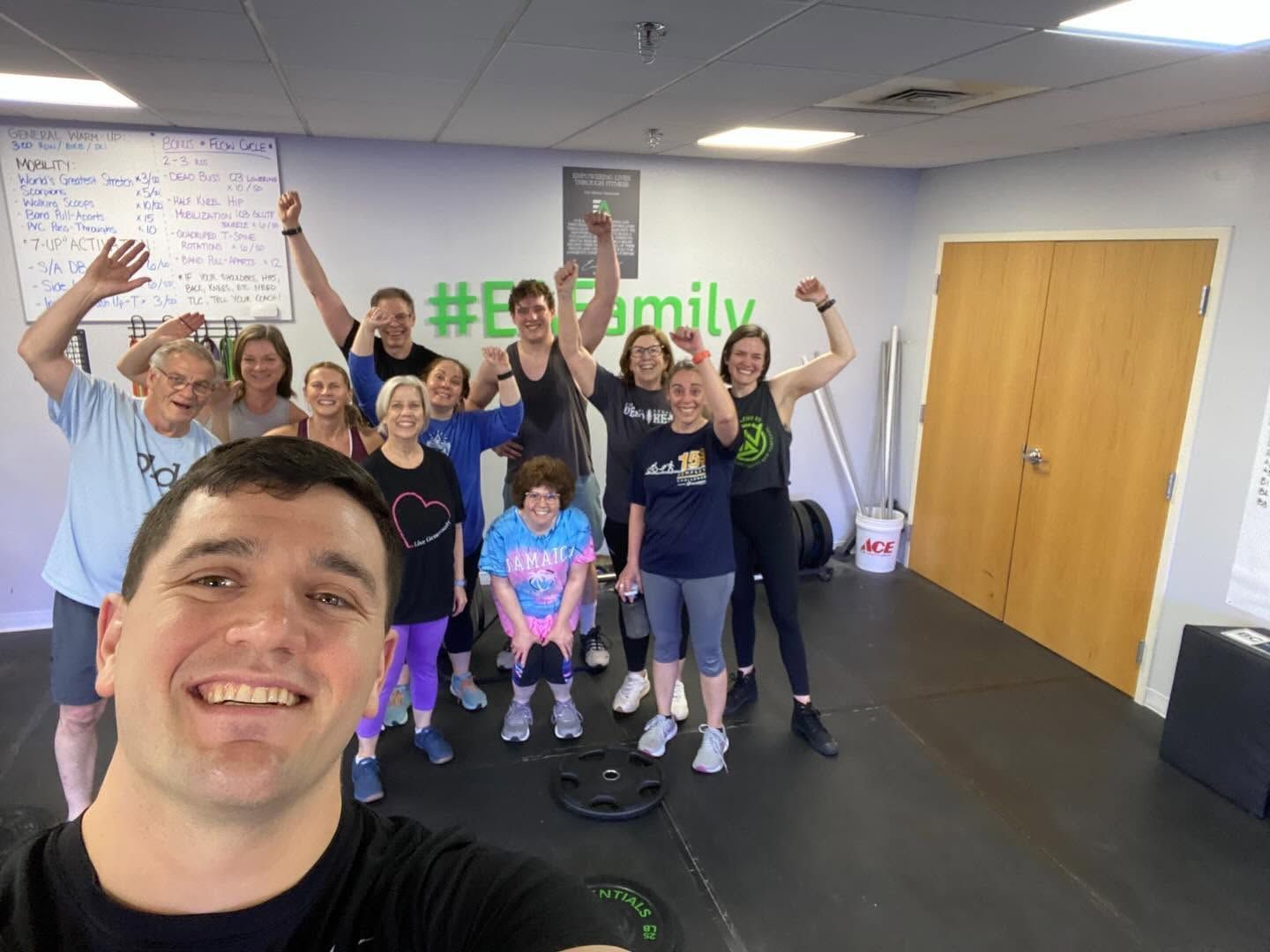
That’s part of the approach at EA Fitness & Performance, where coaching is individualized rather than one-size-fits-all. Our Green Swing Academy approach connects foundational habits, mobility, strength, golf-specific power, and on-course performance.
Make screening part of the plan, not a guess
Why is one side of your body tighter? Is your hip rotation limited? Does your balance change when you move into a different position?
A TPI movement screen looks at how your body moves and helps identify physical limitations that may affect your swing. It gives a coach information to guide your training instead of choosing exercises by guesswork.
A screen is not a medical diagnosis, and no single test can promise a certain swing result. It’s a starting point for a more personal conversation: What’s moving well? What could use attention? What’s a sensible next step for you?
If you’ve noticed a restriction, recurring ache, or change in your swing, a screen can help you get more specific about your winter training.
Don’t forget recovery, food, and daily movement
Training is only one piece of the off-season. Sleep and nutrition help support your recovery, too. Aim for consistent meals that include a good protein source, and keep an eye on your daily movement.
When you stop walking the course, your activity can drop without you noticing. A brisk walk, a short mobility break, or taking the stairs can help you keep moving through winter.
And one important reminder: don’t train through pain and expect it to fix itself by April. Stop. If an exercise brings on pain, or you have an ache that keeps returning, get appropriate guidance before pushing harder. Training should challenge you, but it shouldn’t require ignoring a warning sign.
Give your spring self a head start
The off-season isn’t time wasted away from golf. It’s a chance to build the strength, mobility, balance, and conditioning that help you return feeling more prepared, not to promise a particular score or swing speed, but to give your body thoughtful support before the season begins.
You don’t need to do everything at once. Start with a plan you can stick with, build gradually, and get help finding the areas that deserve your attention.
If you’re looking for personal trainers in Portland, Maine, or exploring performance fitness in Portland, Maine, we’d be glad to help you plan your next step. Book a movement screen or success session with EA Fitness & Performance before the indoor season gets going.
Here’s to a strong, steady winter, and a more prepared return to the course.
Evan Amell
recent posts